Ayuuḵhl Nisg̱a’a / Traditional Law
Home Who We Are Ayuuḵhl Nisg̱a’a / Traditional Law
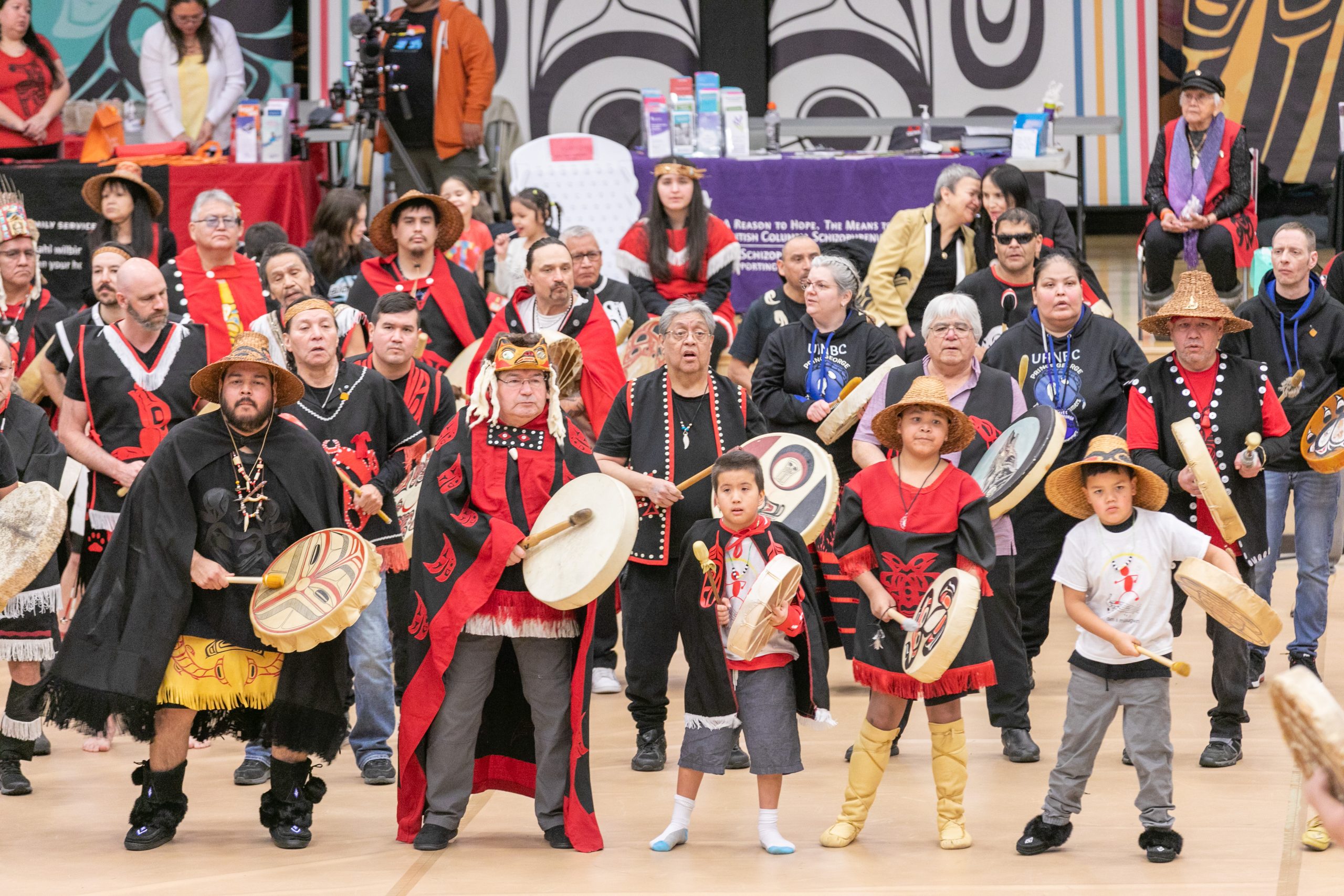
Ayuukhl Nisg̱a’a is an ancient and sophisticated code of laws, customs, and conduct. It is the living record of our nation and our enduring view of the world. It is Nisg̱a’a history as told by our elders and to our children: the creation of the world; the Great Flood; the volcano’s eruption; the founding of the great families and our crest system; the mythical feasts of warriors and spirits; the roles of Nisg̱a’a Simgigat (chiefs), Sigidim-haanak’ (matriarchs), commoners, and slaves.
Our Way
Ayuukhl Nisg̱a’a helps define our traditional relationships and responsibilities. And while ours is a land of plenty, it reminds us that our resources are limited—we have but one bowl from which to eat. This concept is known as Sayt-K’il̓hl-wo’osihl Nisg̱a’a, the Nisg̱a’a Common Bowl.
Like the deeds and misdeeds of Txeemsim, Ayuukhl Nisg̱a’a reveals that every being in the universe is an integral part of the whole—that we are all interdependent. This is the foundation of our code.
In Ayuuḵhl Nisg̱a’a:
- Yuuhlimḵ’askw means guidance transmitted through counsel, lectures, and storytelling;
- Ganwilxo’oskw means wisdom;
- Haẃahlkw covers that which is not permitted, forbidden, taboo, based on our belief system, and precepts (the consequences are taught with haw̓ahlkws)
- K‘aats for instance forbids intermarriage/dating within one’s own Pdeek (tribe), and is the reason people are banished from the Nisg̱a’a society; and
- G̱andidils, the traditional Nisg̱a’a cycle of life, includes Ýaskw (which occurs at puberty), one of the four transitions of the specific phases of as a Nisg̱a’a journeys, from birth to death, and returns to the spirit world.