Nisg̱a’a culture is deeply rooted.
Our language is written on the land.
Explore our unique place in this world and learn how it has defined our past and present, as it continues to shape our future.
Ḵ’alii-Aksim-Lisims / Nass River
Our river flows from glaciers high in the Saviour Mountains, through a valley of towering forests, connecting the heavens, earth, and sea. Along the way, it courses through Nisg̱a’a life and culture. Its bounty has allowed us to develop one of the most unique and sophisticated Indigenous cultures in North America—one with a rich legacy of arts, crafts, dance, and oral tradition to both cherish and share.
One of British Columbia’s great rivers, Lisims is the spawning ground of five species of salmon, steelhead, and saak (oolichan), the first fish to arrive each year, just as winter supplies run low. For this reason, we also refer to saak as halimootkw—the saviour fish.
Lisims is our source, our sustenance, our way.
Lisims is the lifeblood of our people.
Sgańisim X̱hlaawit / Vetter Peak
When the Great Flood occurred, Nisg̱a’a saved themselves in rafts and canoes. To prevent being swept away, they tied their vessels to the four highest peaks in Nisg̱a’a territory. These peaks, including Sgańisim Xhlaawit, are known as the Saviour Mountains.
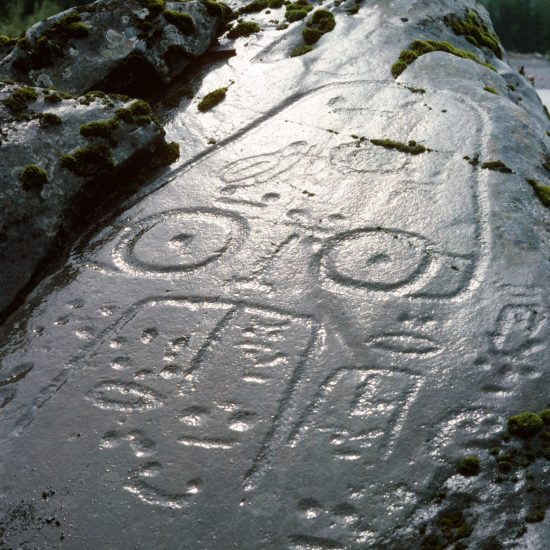
Wil Luu-wanhl Hayatskw / Where the Copper Shields Are Painted
Located in K’alii-Aksim-Lisims (Nass River), hidden from view during spring runoff, these ancient petroglyphs are images of copper hayatskw, which represent great wealth and prestige. Likenesses of four copper hayatskw are visible at Wil Luu-Wanhl Hayatskw.
Sg̱ańisim Lax̱swan / Mt. Hinkley
Located near the tip of Portland Canal, Sg̱ańisim Laxswan is one of four Saviour Mountains where Nisg̱a’a sought refuge during the Great Flood. Some say that it’s still possible to see ropes embedded in the rock of these peaks where Nisg̱a’a tied their canoes.
Wil Bax̱hl Mihl / River of Stone
Our world changed forever when the volcano Ksi-Bax̱hl Mihl erupted on Nisg̱a’a Lands in the late 1700s. In this cataclysmic event, a molten river flowed approximately 20 kilometers long and three kilometers wide. It destroyed everything in its path, sparked fires in the surrounding forests, changed the course of Ḵ’alii-Aksim-Lisims, and covered two Nisg̱a’a villages. More than 2,000 people perished.
As the people watched molten lava cover over their villages, Gwaax̱ts’ag̱at (a powerful supernatural being) suddenly emerged to block the lava’s flow. For days, Gwaax̱ts’ag̱at battled the lava flow with its great nose. Finally, the lava flow was halted and Gwaax̱ts’ag̱at retreated into the mountain where it remains to this day.
The vast lava beds still dominate Nisg̱a’a Lands. Sacred grounds, they serve as a memorial to those who lost their lives and as a reminder of the importance of kwhlix̱oosa’anskw (respect)—both for the natural world and the wisdom of the elders.