Chiefs & Matriarchs
Home Who We Are Chiefs & Matriarchs
As Nisg̱a’a, our identity passes down to us through our mother’s line.
A Wilp (house) is a special kind of Nisg̱a’a family. The members of a Wilp are all descendants of a common female ancestor and look out for one another. Nisg̱a’a children are born into their mother’s Wilp. Each Wilp has its own Sim’oogit (chief). Members of a Wilp support the chief when he gives a feast.
Traditionally, each member of a Wilp lived in a w̓ii tx̱as wilp (longhouse). As each Wilp grew in members, supplementary houses called Huwilp were erected to provide shelter for the remaining people from the original Wilp. Between the four Pdeeḵ (tribes), there are now over 60 separate and distinct Huwilp.
Each Wilp has a long, fascinating history. In this history, members of the Wilp meet supernatural beings. These meetings give the Wilp rights to many Ayukws (crests).
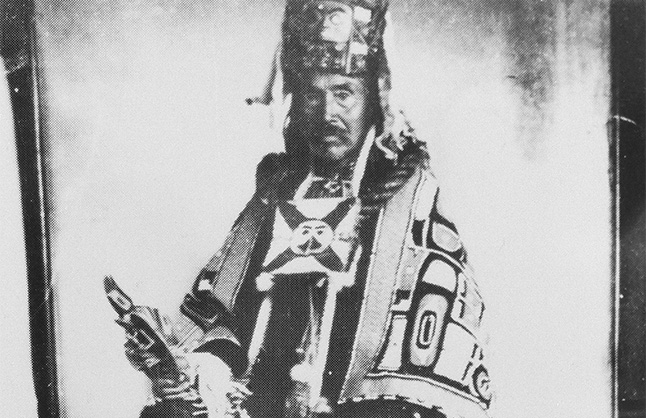
Simgigat | Chiefs
Simgigat (chiefs) is the plural form of Sim’oogit (chief). The Simgigat are the very highest ranking men in the Wilp. Although sometimes a Wilp has only one Sim’oogit, there is usually more than one.
Leadership is based upon kwhlix̱oosa’anskw (respect) in Nisg̱a’a society. A man becomes a Sim’oogit (chief) when he inherits the top-ranking name in his Wilp (house). Although he inherits his Sim’oogit name, he does not inherit all the strength the name had under the previous chief. A new chief must prove he is a good and able leader and that his Wilp will support him before he can gain the respect of the other chiefs. He gains respect through giving feasts, performing great deeds, gaining wealth, leading a clean life, being good to his people, speaking and acting with wisdom, and obeying Nisg̱a’a laws. When a chief was wealthy, it showed that he had influence not only in the world we see around us but also in the spirit world.
The Sim’oogit looks after the people in his Wilp. He always asks the elders in his Wilp for advice. The elders and the chief listen to each other. When they agree with one another, they know they have made their decision—they have reached a consensus.
The primary responsibility of the chief has always been to govern according to Lip Ayuug̱am̓ (our laws), Lip Wilaa Loom̓ (our culture), and Lip Algax̱am̓ (our language). Members of the Wilp ask the Sim’oogit for advice on all important decisions. He works to ensure the people in his Wilp have what they need.
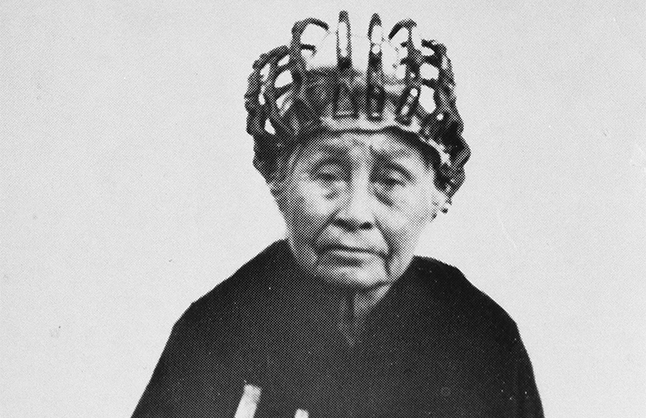
Sigidim-Haanaḵ’ | Matriarchs
Because we all descend from the original mother, Nisg̱a’a society is matrilineal—based on kinship through the mother’s line. When children are born, they become members of their mother’s family. If a woman is an Eagle, her child is an Eagle. It is the same for the members of the Wolf, Raven, and Killer Whale clans.
Sigidim-Haanaḵ’ (matriarchs) have always participated fully in Nisg̱a’a society, not only in the preparation of food and clothing, and the teaching of young people, but also in the decision-making and governance of their Wilp (house). Matriarchs are the keepers of oral history. They also assist in the formation of the young men and women who eventually become future decision-makers.
Traditionally, Sigidim-Haanaḵ’ were educated to prepare them for great responsibilities. Like the Simgigat (chiefs), matriarchs were responsible for making decisions crucial to the wellbeing of the Wilp, including the final selection of the Sim’oogit (chief). Their roles included diplomat, legal counsel, and political advisor. When a man becomes a Sim’oogit, his wife (who is from a different clan) becomes a matriarch when her Wilp decides she is ready to be a matriarch. The chief’s eldest sister is the Wilp matriarch, or Sigidim-naḵ’. The chief’s mother or eldest sister is the Wilp martriarch, or Sigidim-naḵ’. When no man is ready or fit to become Sim’oogit, the title is held by the matriarch until a suitable young man is prepared to become chief.
Together, a Sim’oogit and the Sigidim-naḵ’ make the ultimate decisions regarding inheritance of names within her Wilp.